Single Sperm/cell Large and small RNA seq

This method sequences both large coding/noncoding RNA, and small RNA from a single cell.

Single sperm Large and Small RNA seq:


Buffer Preparation:


Make 2X sperm lysis buffer:


160µl H20

100µl 2% SLS

40µl 1M Tris-HCL pH8

20µl 2M NaCl

80µl 1M DTT

400µl


Make Adenylated 3’ ligation adaptor:


**3’ adaptor adenylation should be done in bulk. Minimum 5 reactions.


1µl 100µM ligation adaptor (100pmol input)

2µl 10X buffer

2µl 1mM ATP

2µl Mth RNA ligase

13µl NF-H20

20µl


65˚C 1hr, 85˚C 5min, 4˚C hold


  • pool 5 reactions together, purify with kappa beads with isopropanol alcohol


100µl pooled reaction

100µl Beads

270µl Isopropanol


Elute with 20µl NF-H20.


**optional: check the yield with Agilent Bioanalyzer DNA HS.


PartI:


Lysis:


~1µl sperm in PCR tube

1µl buffer 1 2X

2µl total


70˚C 5min, 4˚C hold


1.5µl H2O

0.22µl Tween-20 40%

Mix by pipetting, Room Temperature 5min


PolyA:


0.75µl First Strand Buffer 5X

0.25µl ATP (0.5mM)

0.25µl polyA polymerase

0.125µl RNaseIN

5.125µl


Mix by pipetting, place quickly on thermocycler


16˚C 5min, 65˚C 10min, 4˚C hold


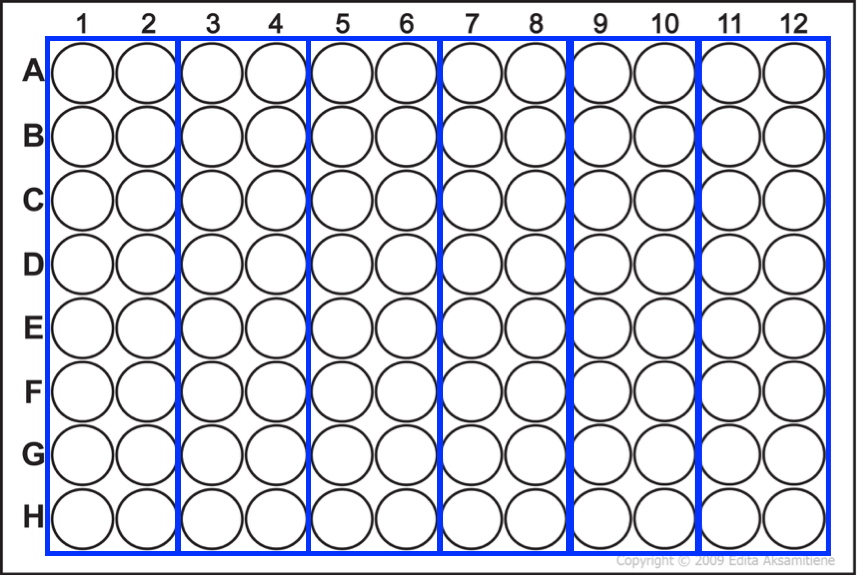
Add: 1µl Barcode oligo in 96 well plate (0.025µM)


**Be very careful not to cross-contaminate the primers. Do not reuse plate film after taken the film off.


65˚C 5min, Snap cool on ice


* make 1miilion fold dilution of ERCC spike in #2

RT:


0.75µl FS buffer 5X

0.25µl DTT 100mM

0.5µl dNTP 10mM

0.25µl RNaseIn

0.5µl SSII

1µl ERCC Spikein #2 (1M dilution)

0.375µl Betain 5M

0.25µl H2O


10µl total

25˚C 10min, 42˚C 90min, 70˚C 10min, 4˚C hold


ExoI Digestion:
Untitled99

  • pool 16 samples together, add 5µl ExoI to each Rxn. 37˚C 45min, 4˚C hold
  • purify with 1.5X Kapa beads, elute with 12µl 10mM Tris
  • Again, pool the 6 purified samples together, purify with 1X KAPA beads, elute with 12µl 10mM Tris. We now have 96 samples pooled together.


**Safe stopping point: The purified cDNA can now be stored safely at -20˚C


Part2:


2nd strand synthesis w/ NEB Next Ultra Directional RNA library kit


Make 1st strand reaction buffer + random primer mix


4µl 1st Strand Buffer

1µl Random primer

5µl H2O

10µl


2nd Strand synthesis


10µl cDNA purified

10µl 2X 1st strand buffer + random primer

20µl


95˚C 5min, SNAP cool on ice


46µl H2O

8µl 2nd Strand Syn Buffer 10X

4µl 2nd Strand enzyme mix

2µl dNTP (10mM)

80 total


16˚C 1hr


Purify with 1.8X beads, elute with 10µl H2O, and proceed to RNA synthesis


T7 RNA synthesis:


10µl purified 2nd strand cDNA

2µl 10X reaction buffer

2µl ATP

2µl GTP

2µl UTP

2µl CTP

2µl T7 polymerase

22µl


37˚C overnight, run 2µl on gel to confirm RNA


PartIII:


DNaseI Digestion:


– Add 1µl DNase I to each RNA syn. Reaction. Incubate 37˚C 15min.


100µl Reaction + H2O

150µl Kapa Beads


– purify with 1.5X Kapa Beads. Elute with 20µl H2O


RNA Fragmentation


Half of our synthetic RNAs will be fragmentized before processed further. The other half will stay unfragmentized.


9µl RNA purified

2µl RNA Fragmentation Buffer

9µl H2O

20µl


94˚C 2min, SNAP cool on ice


add 2µl RNA stop solution


Purify with Ampure beads with Isopropanol


22µl Fragmentized RNA

28µl H2O

150µl Ampure beads

50µl Isopropanol


elute with 10µl H2O , proceed to 3’ adaptor ligation


3’ adaptor ligation with NEB small RNA kit


Now we have two sets of samples: fragmentized (LRNA enriched) and unfragmentized (sRNA enriched)


The unfragmentized RNA will be enriched in small RNA, whereas the fragmentized RNA will be mostly large RNA


  • First, dilute MARs 3’adaptor adenylated 6 fold 1µl stock:5µl H2O


6µl Input RNA

1µl MARs 3’ adaptors adenylated 6 fold dilution

7µl total


70˚C 2min, SNAP cool on ice


10µl 3’ ligation reaction buffer 2X

3µl 3’ ligation enzyme mix

20µl


incubate 25˚C 1hr


Hybridize RT Primer:


To the ligation reaction: Add:


4.5µl H2O

1µl 2nd RT primer (6 fold dilution of 100µm)

75˚C 5min, 37˚C 15min, 25˚C 15min, 4˚C hold


RT:

Add:

4.5µl H2O

8µl 1st strand syn buffer

1µl RNaseIn

1µl Protoscript II RT

40µl total

Incubate 50˚C 60min


PCR

Add:


50µl Long Amp Taq 2X MM

2.5µl universal primer

2.5µl Index primer ( use different Index, carefully note the index number )

5µl H2O

100µl


Stage1:


94˚C 30s


Stage2:

94˚C 15s

62˚C 30s

70˚C 30s

cycle Stage2 for 15 cycles


Stage3:

70˚C 5min

4˚C hold


run 5µl on gel, add more cycles if necessary


Safe stopping point: the PCR reaction could be stored in -20˚C until it can be processed further


Size Selection:


  • The PCR-adaptor dimer is 150bp, so the library should be size selected from 170bp – 600bp by methods of choice, e.g. e-gel, pippin prep, gel cutting. Concentrate the size-selected library in 20µl NF-H20.
  • Quantify with Qubit DNA HS.
  • Run 1ng/µl dilution on Agilent Bioanalyzer DNA HS for QC, make sure there is no adaptor dimers left.


Sample Sequencing on NextSeq500:

  • Pool samples together by equal molar mass, make sure all samples have different index numbers.
  • Sequence on illumina NextSeq500 with the following parameters:
    • Use NextSeq500 mid output Kit 150 cycles
    • read 1: 101  , read2: 51 , Index: 6
    • 3pM of library input , while keeping 50% of 1.8pM phiX


Preparing single cell library for cheap

Single cell RNA-seq is a pretty popular topic right now. Most of the kits are really expensive and if you are new to preparing sequencing libraries, you are not likely to be successful in the first couple tries.

This protocol uses the SMART-Seq® v4 Ultra® Low Input RNA Kit for Sequencing by Takara, compare to the Takara user manual, this protocol reduces cost of reagent by half, with a successful library construction rate near 100%.

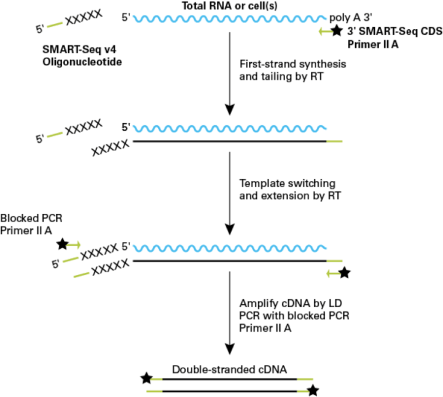
Like many of its kits, the Takara SMART-Seq takes advantage of some run-off effects of the Moloney Murine Leukemia Virus (MMLV) derived reverse transcriptase and adds an oligonucleotide to the 5’ end of the RNA at the end of the cDNA synthesis for each RNA molecule. This is called “Template Switching”.

A

In the future, I will do some other single cell RNA-seq protocols, such as Drop-seq.


Other than standard lab supplies, you will need the following reagents:


-SMART-Seq® v4 Ultra® Low Input RNA Kit for Sequencing by Takara

(we will be able to do 24 reactions with a 12 reactions kit J)

– AMPure XP Beads

– ERCC RNA Spike-In Mix (optional, but I highly recommend it)

– Qubit dsDNA HS Assay Kit

– Qubit Fluorometer

– Qubit assay tubes

– Agilent Bioanalyzer High Sensitivity DNA Analysis Kits

– Nextera XT DNA Library Preparation Kit


  • First, sort individual cells into a 96-well plate, or 0.2ml PCR tubes, using a method of your choice. e.g. FACS. The liquid volume should be under 3.75µl.


  • Keep samples and reagents on ice for as long as you can.
  • Vortex buffer and primers and spin down briefly before use!


Prepare a 10X lysis buffer:


19µl 10X lysis buffer

1µl RNase inhibitor


20µl total


  • Mix by pipetting
  • Make a fresh 4million fold dilution of ERCC spike in from stock.


Cell lysis:

0.5-3.75µl cell

Xµl Nuclease Free water (3.75µl – vol. of cell)

1µl ERCC spike in dilution

0.5µl 10X lysis buffer (Make a master mix with nuclease-free water, 0.5µl alone is difficult to pipette!)


5.25µl total


  • Incubate room temperature 5min, then 10min on ice.


Reverse Transcription:

  • First, make 1/100 dilution of 3’ SMART-Seq CDS Primer II A (12µM)


5.25µl cell lysed

0.5µl Nuclease-free water

0.5µl 3’ SMART-Seq CDS Primer II A (1/100 dilution)


72˚C 3min, transfer immediately on ice, incubate for additional 2min


Make RT Master Mix:

2µl 5X Ultra Low First-Strand Buffer

0.5µl SMART-Seq V4 Oligonucleotide (48µM)

0.25µl RNase inhibitor

1µl SMARTScribe Reverse Transcriptase


3.75µl total


  • Add RT Master Mix to the cell lysis + CDS primer. The total volume of the RT reaction is 10µl. Incubate 42˚C 90min, 70˚C 10min, 4˚C hold.


Safe Stopping Point: the RNA are now transcribed to cDNA, which is more stable, the samples could be stored in -20˚C for weeks.


Pre-amplification PCR:

  • First, make a 1/200 dilution of PCR_ Primer II A


12.5µl 2X SeqAmp PCR Buffer

1µl PCR Primer II A dilution

0.5µl SeqAmp DNA Polymerase

1.5µl nuclease free water

10µl RT reaction


25µl total


  • Make a master mix of 2X SeqAmp PCR Buffer, PCR Primer II A dilution, SeqAmp DNA Polymerase, and water, mix well be pipetting, then add to the RT reactions


  1. 95˚C 1min
  2. 98˚C 10s
  3. 65˚C 30s
  4. 68˚C 3min
  5. go back to step 2 for 19 more cycles, so 20 cycles total
  6. 72˚C 10min

4˚C hold


*The number of cycles will depend on the cell type. But 20 should be a good start.


  • (Optional) Quantify dsDNA in reactions using Qubit dsDNA HS kit, the DNA concentration should be between 2-3 ng/µl. If the concentration is low, place the reaction back on the thermal cycler, add 3 cycles, and measure again.


  • Purify PCR reaction with 0.8X AMPure XP Beads
  • Quantify purified cDNA with Qubit DNA HS assay, dilute to ~500pg-1ng/µl, run on a Bioanalyzer DNA HS chip.

Bad: degraded RNA                        Good: full length RNA

Safe stopping point: The purified cDNA can be stored in -20˚C for months.

Sequencing Library Construction with Nextera XT kit

 With our double-stranded, pre-amplified cDNA, we can now use the Nextera XT kit to make dual indexed libraries so up to 96 single cell libraries could be pooled and sequenced together.

B

The nextera kit makes use of some special properties of the viral transposons and contains a synthetic version which can cut dsDNA and ligate adaptors at cutting sites at the same time. During the tagmentation step, the full-length ds cDNA are cut to approximately 300 bp and PCR handles are added to the ends of the cutting sites. During the PCR step, longer, indexed primers which part of them matches the previous added-on PCR handles are used to amplify sequencing libraries. These longer primers also contain reads that are compatible with illumina sequencers.

After this step, our library construction is finished and we will move to clean up and QC before finally sending them off for sequencing.

Of course, as penny pinchers, we will only use ¼ of reaction amounts recommended by illumina for each sample, so a 24rxn kit could be used for 96 samples.


  • Dilute cDNA sample to ~160pg/µl, it is important that the total input of cDNA is ~200pg

Tagmentation:


  • make a master mix of TD buffer and Amplicon Tagment Mix(ATM)

2.5µl TD Buffer

1.25µl ATM


3.75µl

+ 1.25µl cDNA dilution


5µl total

Incubate on a thermal cycler 55˚C 10min, keep at 10˚C

  • While the reaction is kept at 10˚C, add 1.25µl NT buffer and mix well incubate at room temperature for 5mins.


PCR:

  • add the following mix to neutralized tagmentation reaction

3.75µl NPM

1.25µl primer N70X

1.25µl primer N50X


12.5µl total


Stage1: 72˚C 3min

95˚C 30s

Stage2: 95˚C 10s

55˚C 30s

72˚C 30s

Cycle stage2 for 12 cycles

Stage3: 72˚C 5min, 4˚C hold


-Take 2µl from each single cell library and pool them together. Perform purification with either ampure beads or pippin prep.

– The size-selected libraries could be checked by loading onto a Bio-analyzer DNA HS chip. Now your library is ready for sequencing on an illumina platform!

Eukaryote ribosomal RNA removal

This rRNA depletion method uses Ribominus Kit by ambion. This protocol is a modified version of the protocol provided with the kit and is good for rRNA depletion of up to 5µg of total RNA in one reaction.

Advantages of this protocol:

  • Reduced cost of reagent
  • Simplified steps.
  • Less hands-on time

How it works:

The “active ingredients” in this kit are the 5’biotin-labeled Locked Nucleic Acid (LNA) probes which have sequences complementary to the eukaryotic ribosomal RNAs. The probes are first hybridized with the rRNAs in the total RNA, then the streptavidin-labeled magnetic beads “pulls down” all the rRNAs by binding to the biotin-labeled probes, leaving only non-rRNA RNA floating free in the supernatant.

Material/Reagents:

– RiboMinus™ Eukaryote Kit for RNA-Seq

Catalog. no. A10837-08

– 3M sodium acetate

– Isopropyl alcohol

– 80% ethanol.

– Glycoblue coprecipitant (or glycogen )

– Magnetic stand for 1.5ml eppendorf tubes (optional)

– Low-binding, nuclease free 1.5ml tubes.

*Experiments should be conducted in a Nuclease-Free environment.

Probe Hybridization:

10µl total RNA (add nuclease free water if volume is less than 10µl)

4µl Probe

150µl Hybridization buffer


164µl total

Mix by gently flicking the tubes, spin down briefly with a mini centrifuge.

On a thermal cycler, set up the following program and place the reaction on the cycler:

75˚C 5min, 37˚C 30min, 37˚C forever

While the hybridization reaction is incubating, go ahead and prepare the magnetic beads.

Preparing RiboMinus beads:

  1. Set up a 37˚C heat block or water bath for 1.5ml tubes
  2. Fully resuspend the beads by vortexing
  3. Take out 200µl beads into a 1.5ml tube, place on to the magnet stand, let stand for 2mins for until the supernatant is clear.
  4. Take out and discard the supernatant. Be careful not to disturb the beads.
  5. Wash the beads by fully resuspend with nuclease-free water, place back on magnetic stand, and discard the supernatant.
  6. Repeat step 5 once.
  7. Wash with 250µl of hybridization buffer. Discard the supernatant
  8. Resuspend beads with 100µl hybridization buffer, keep at 37˚C until ready to use.


Ribosomal RNA removal

  1. Once the hybridization steps have moved to the 37˚C forever hold, and the beads preparation is finished, quickly add hybridized sample to the 1.5ml tube containing prepared magnetic beads, mix well by pipetting. Try to avoid cooling of the samples and the beads from 37˚C.
  2. Incubate at 37˚C for 15-20mins, mix the beads every 7-9mins by gently flicking the tubes.
  3. Briefly, spin down the tubes to get all the liquid to the bottom of the tube. Place the tube on a magnetic stand, let stand for 5mins for until the supernatant is clear.
  4. Collect the supernatant. This contains the rRNA depleted RNA. Pipette up slowly so you don’t disturb the beads. It’s ok to leave some liquid behind so you don’t accidentally get any beads.
  5. Gently, resuspend beads in 25µl Hybridization buffer, place tube on magnetic stand again until supernatant is clear. Collect supernatant again.

Purify depleted RNA using precipitation method:

1.

279µl Supernatant collected

30µl 3M sodium Acetate

2µl Glycoblue (or glycogen)

320µl Isopropyl alcohol


630µl total

  1. Mix well by inverting or vortexing. Incubate -80˚C > 30min.
  1. Spin at 15,000rpm, 4˚C for 1hr
  2. The RNA should form a visible pellet on the bottom of tube. If glycoblue is used, the pellet is blue with lighter outer edges this should be easy to spot. If regular glycogen is used, the pellet is a translucent white, which could be hard to see.
  3. Carefully pour out supernatant without disturbing the pellet. It’s ok if some liquid is left.
  4. To wash pellet, add 800µl ice cold 80% ethanol. Gently invert the tubes 4-5 times, spin 15,000rpm, 4˚C for 8mins.
  5. Make sure the pellet is still on the bottom of the tube. Pour out supernatant and wash with 80% ethanol again.
  6. Make sure the pellet is still on the bottom of the tube. Pour out supernatant, keep the tube upside down and cap open, dab gently onto a kim-wipe to get rid of excess ethanol. Air-dry the pellet for 5min or until all visible ethanol have evaporated.
  7. Resuspend the pellet by adding 20µl nuclease-free water. Do not pipette up and down or the pellet might get stuck in the pipette tip. Just make sure the pellet is fully emerged in water, allow it to incubate for 15-20min on ice to fully dissolve the pellet.
  8. Briefly vortex the sample, spin down to collect the liquid to the bottom of the tube.
  9. Finally, quantify the RNA using method of your choice. We like to use Qubit RNA HS kit.
  10. Add RNase inhibitor to the RNA, it is now ready to be used or can be stored in -80˚C.

Notes:

  1. Agilent Bioanalyzer result of RNA before and after rRNA removal
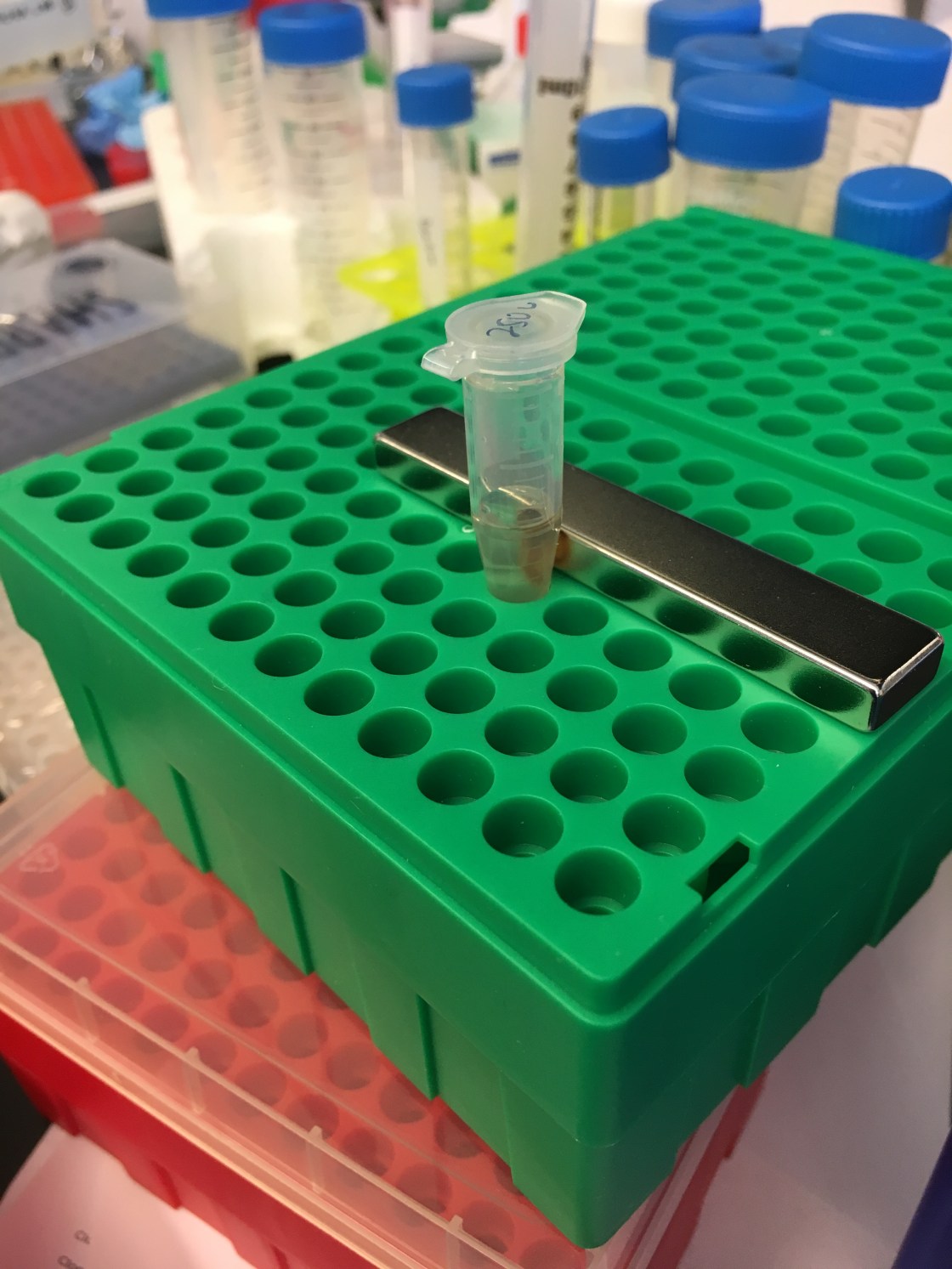
  1. Although this kit uses magnetic beads, it is not necessary to buy a magnetic stand to complete this experiment, especially when the mark-up price for the magnetic stands sold by the kit’s companies are ridiculously high. One can buy a strong magnet from Amazon for few dollars, and tape it to a pipette tip rack to make a “ghetto” magnetic stand, which gets the job done.

Photo Apr 13, 5 40 40 PM